
In bass clef, the lines from bottom to top are G, B, D, F and A. The spaces are A, C, E and G. Start with two reference notes: F on the line between the clef’s two dots, and middle C on the short ledger line above the staff.
This guide takes you from those two landmarks to a five-note reading check. You can name the notes without an instrument, then find them on a piano or MIDI keyboard.
What does the bass clef tell you?
A clef gives the staff its note names. The bass clef is also called the F clef: its two dots sit on either side of the F line, the second line from the top. That F is below middle C. The Open University’s notation glossary defines this reference point.
Count lines and spaces from the bottom. Each move from a line to the next space, or a space to the next line, advances one letter in the repeating pattern A–B–C–D–E–F–G.
- Lines, bottom to top: G–B–D–F–A.
- Spaces, bottom to top: A–C–E–G.
These are the natural-note names before any key signature or accidental changes them. The exercises here have no sharps or flats. A memory phrase can help you check a name, but also practise finding a note directly from a nearby landmark.
Memory tips for bass and treble clef
For these common mnemonics, read the lines or spaces from bottom to top. Use the first letter of each word:
- Bass-clef lines: G-B-D-F-A. “Good Boys Do Fine Always.”
- Bass-clef spaces inside the staff: A-C-E-G. “All Cows Eat Grass.”
- Treble-clef lines: E-G-B-D-F. “Every Good Boy Does Fine.”
- Treble-clef spaces inside the staff: F-A-C-E. They spell “FACE”.
Can FACE work in bass clef too? Yes: start with F in the space just below the bottom line, then move up through spaces A, C and E. Those spaces also spell FACE, but the first one is outside the staff. For the four spaces inside the bass staff, use A-C-E-G.
Yamaha’s bass-notation guide uses the two bass-clef phrases. The MuseScore treble-clef reference shows the treble line and space patterns.
Check the clef first, decide whether the note is on a line or in a space, then use the matching phrase. A mnemonic gives you a letter name; still check its octave against F or middle C before you play.
Find F and middle C on the staff and keyboard
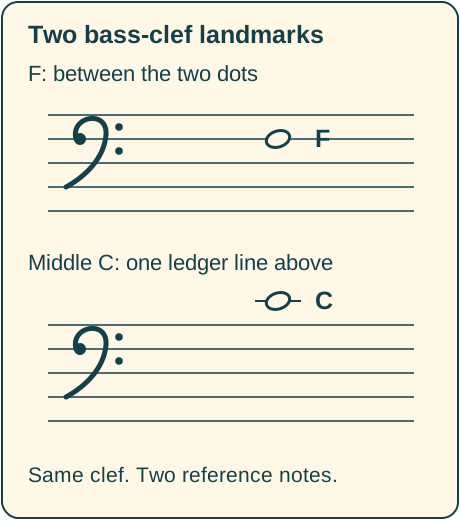
- Locate middle C. On a standard piano, it is the C near the centre of the keyboard. Each C is immediately to the left of a group of two black keys. Use a known middle-C reference if your keyboard is short or an app shifts the visible range.
- Find the F below it. Move left from middle C through the white keys B, A, G and F. That F is immediately to the left of a group of three black keys.
- Match the landmarks. Point to the F line in the first drawing, say “F”, then play that F. Point to the ledger-line C in the second drawing, say “middle C”, then play middle C.
Middle C does not become a different key when the clef changes. It is written on a ledger line above the bass staff and a ledger line below the treble staff. Compare it with our treble-clef C, D and E guide.
Try this five-note bass-clef reading check
Read the five noteheads below from left to right. First name each note without playing. Then find its key. There is no rhythm to follow here; the numbers identify the questions, not fingers or beats.
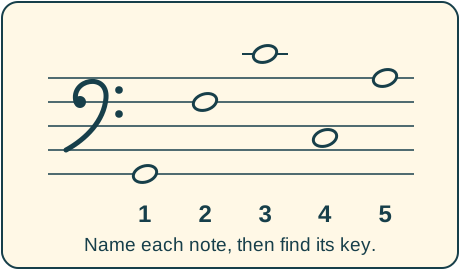
Show the five answers
- G: the bottom line, well below middle C.
- F: the line between the clef’s dots.
- Middle C: one ledger line above the staff.
- C below middle C: the second space from the bottom, one octave below middle C.
- A: the top line, below middle C.
If one answer takes a long time, repeat only that note and its nearest landmark. For example, from the F line, move up one space to G and up one line to A. Then return to the five-note check in a different order, such as 4–2–5–1–3, so you practise recognition rather than remembering a sequence.
Avoid these three common mix-ups
- Using treble names on the bass staff. The bottom line is G in bass clef and E in treble clef. Check the clef before you name a note.
- Treating every C as middle C. The C inside the bass staff is an octave below middle C. The correct letter in the wrong octave is still a different key.
- Assuming bass clef always means left hand. Piano music commonly puts bass clef on the lower staff for the left hand, but clefs can change. Follow the notation and any hand markings. The Open University’s guide to following piano scores explains this usual layout and its exceptions.
Keep the next practice session small
On your next attempt, name the five quiz notes in a shuffled order, play them, and record which position still needs a pause. That gives you a specific target for the next session. Add a new note only when you can distinguish its position and octave from the notes you already know.
For a broader session, use our 10-minute piano practice routine. If you want guided note and rhythm practice alongside these paper exercises, try Ultimidi. This bass-clef check stands on its own; it does not require a particular game lesson.