
Start reading piano notes with three neighbours: C, D and E. First connect each note on the staff to a key. Then read a short pattern in a different order. You do not need to memorise the whole staff before you begin.
This exercise uses middle C and the D and E immediately above it. You can try it on a piano, a MIDI keyboard or the on-screen piano in Ultimidi.
Find C, D and E on the keyboard
Look for a group of two black keys. C is the white key immediately to the left of that pair. D sits between the two black keys, and E is the white key immediately to their right. The pattern repeats across the keyboard; for this exercise, use the group around middle C.
In Ultimidi, middle C is labelled C4 in the result details. An octave number helps distinguish it from other C keys. If you use computer keys, follow the small typing-key label on the screen. The letter you press is not necessarily the name of the musical note.
Match those keys to the treble staff
The staff has five lines. For these three notes in treble clef:
- Middle C: sits on a short extra line below the staff, called a ledger line.
- D: sits in the space just below the bottom staff line.
- E: sits on the bottom staff line.
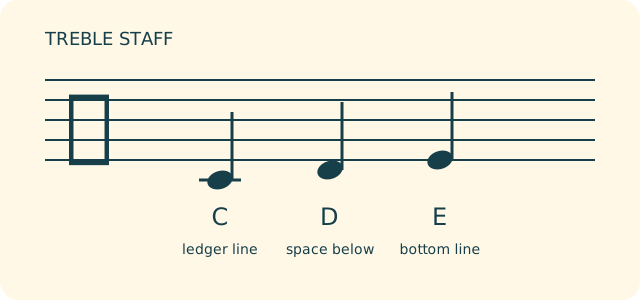
The Open University’s introduction to middle C and ledger lines explains how the staff extends beyond its five lines. A clef matters: the same position in bass clef names a different note.
Try three small reading games
- Point, name, play. Choose one note in the diagram. Say its name, find the matching key and play it once. Take your time; this is a recognition exercise.
- Follow the direction. Play C–D–E–D–C. Notice how the notes move up and then down by one step. Next try C–E–D–C and notice the skipped D on the way up.
- Change the order. Write C, D and E on three small cards. Shuffle them, then draw each note at its staff position on paper before playing it. Check against the diagram. A new order helps you check reading instead of repeating a memorised sequence.
If you lose your place, return to one landmark: middle C on its ledger line. Add its two neighbours again when you can find it comfortably.
Use the first Ultimidi lesson as a bridge
From the festival home, select Start on the next-lesson card. The current first lesson is Your first notes: C. It gives you one pitch to follow before the next lesson introduces D and E. Watch the highlighted key and play when the note reaches the bright Play here line.
After an attempt, select a note in the result timeline. Compare the target with what you played. If you chose the wrong pitch, find the key again before worrying about speed. The game provides practice feedback; it does not assess every aspect of piano technique.
Ready to add timing? Try these three beginner rhythm exercises. If you do not have an instrument yet, see what you can learn with computer keys.